Taiwan: Walking the Austronesian Trail Through a Gastronomic Lens
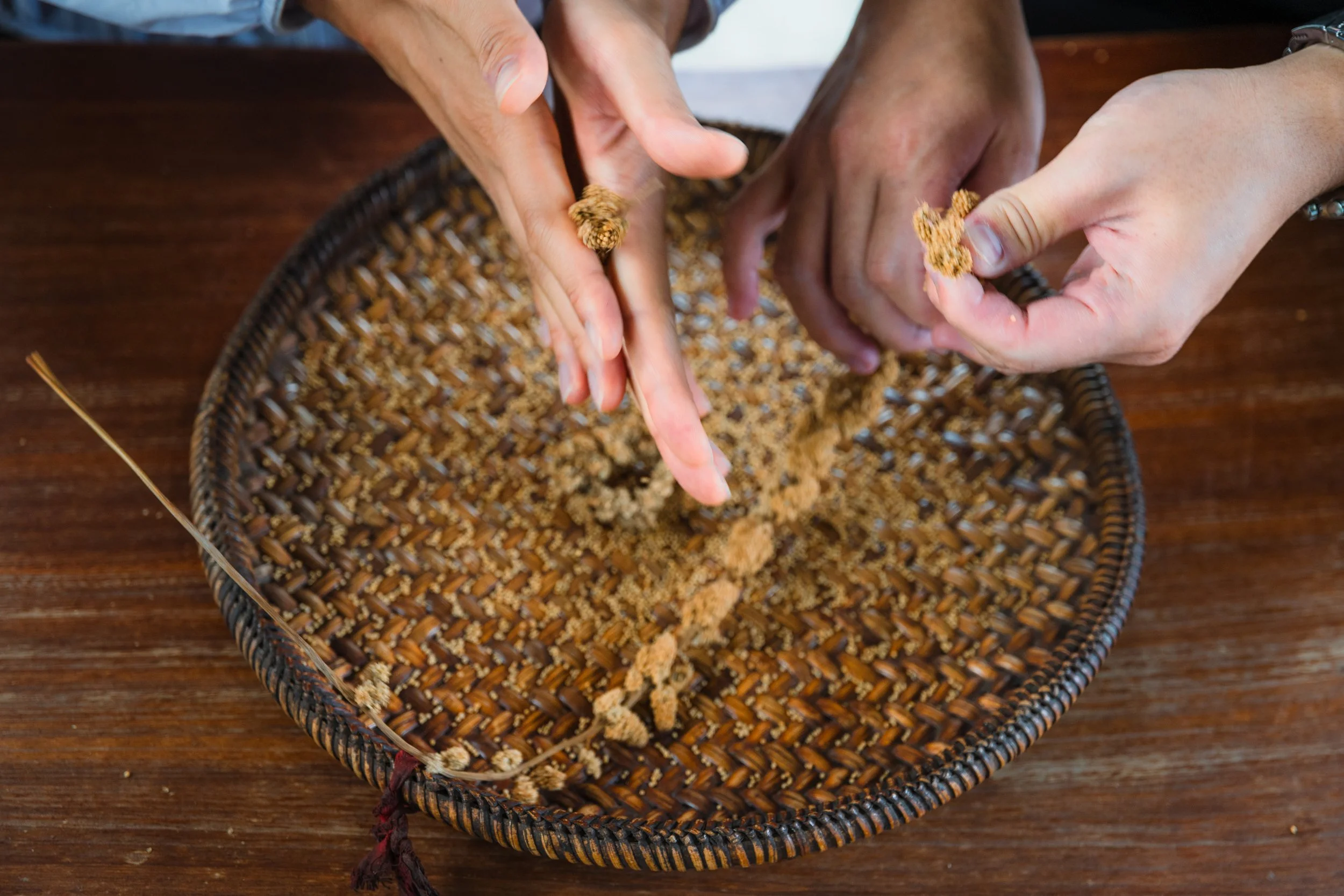
*Millets, a culturally significant crop shared among all austronesian cultures. In Indonesia for instance, Jewawut (millets) is where the name Jawa (Java) is derived from.
Taiwan welcomed me with greetings in Mandarin, even though I doubt I look anything like someone of Chinese descent. Wherever I went—Taipei, Hualien, Taitung, Taichung, or Kaohsiung—conversations almost always began in a language unfamiliar to me, as if people instinctively assumed I was local. Strangely enough, I wasn’t traveling alone. I was accompanied by a relative from the United States, yet not once was he addressed in Mandarin.
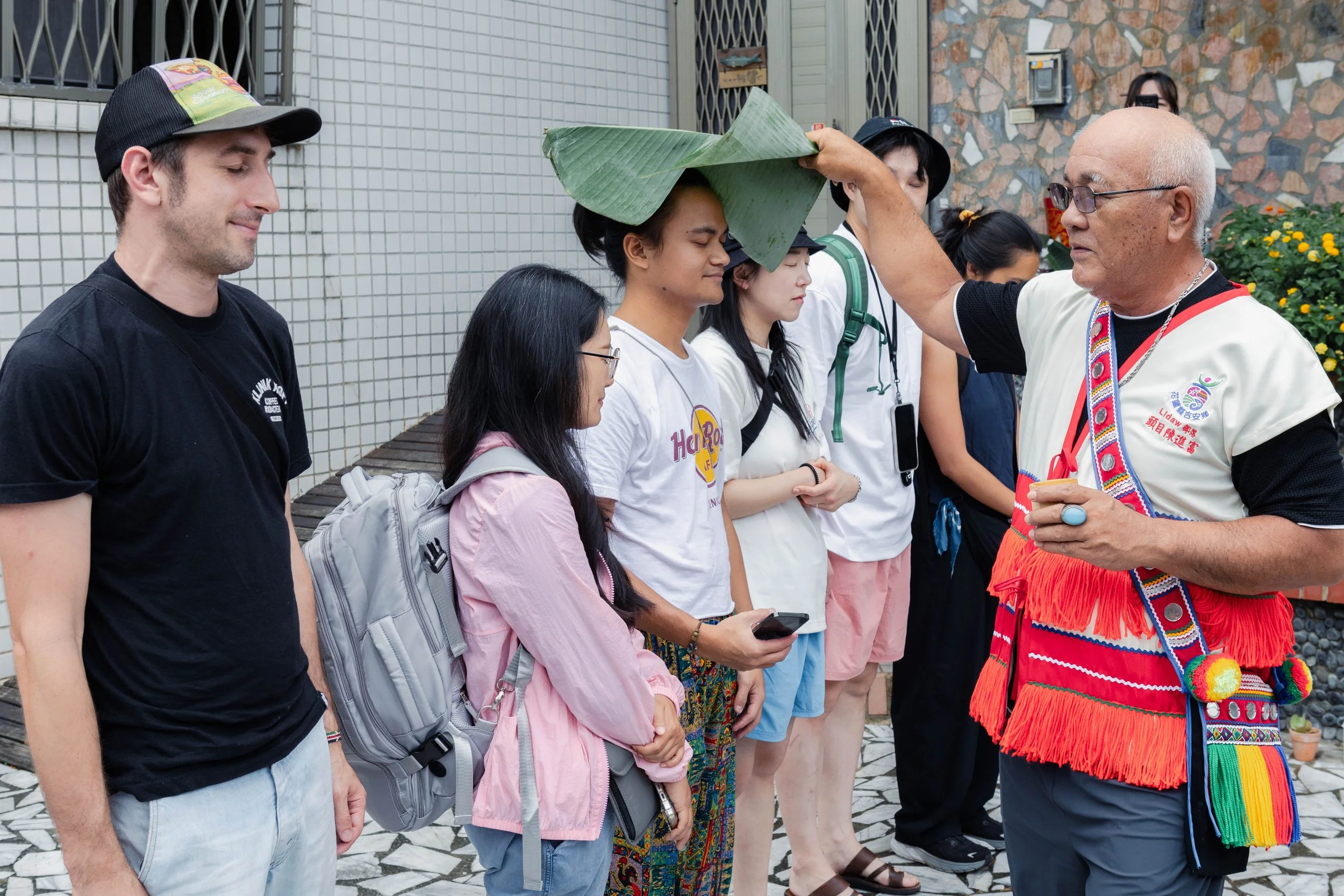
*Opening ceremony by the village chief for all the attendees of Hualien Indigenous Exchange Program 2025
In truth, I already knew why. In fact, that very reason was why I came. I was in Taiwan to take part in the Indigenous Exchange Program organized by Slow Food Hualien. When I applied, I was asked to explain my motivation. My answer was simple and honest:
“I want to meet and witness the cultures of Taiwan’s Indigenous peoples—the ancestral homeland of the early inhabitants of the Nusantara, the point of origin of the Austronesian peoples.”
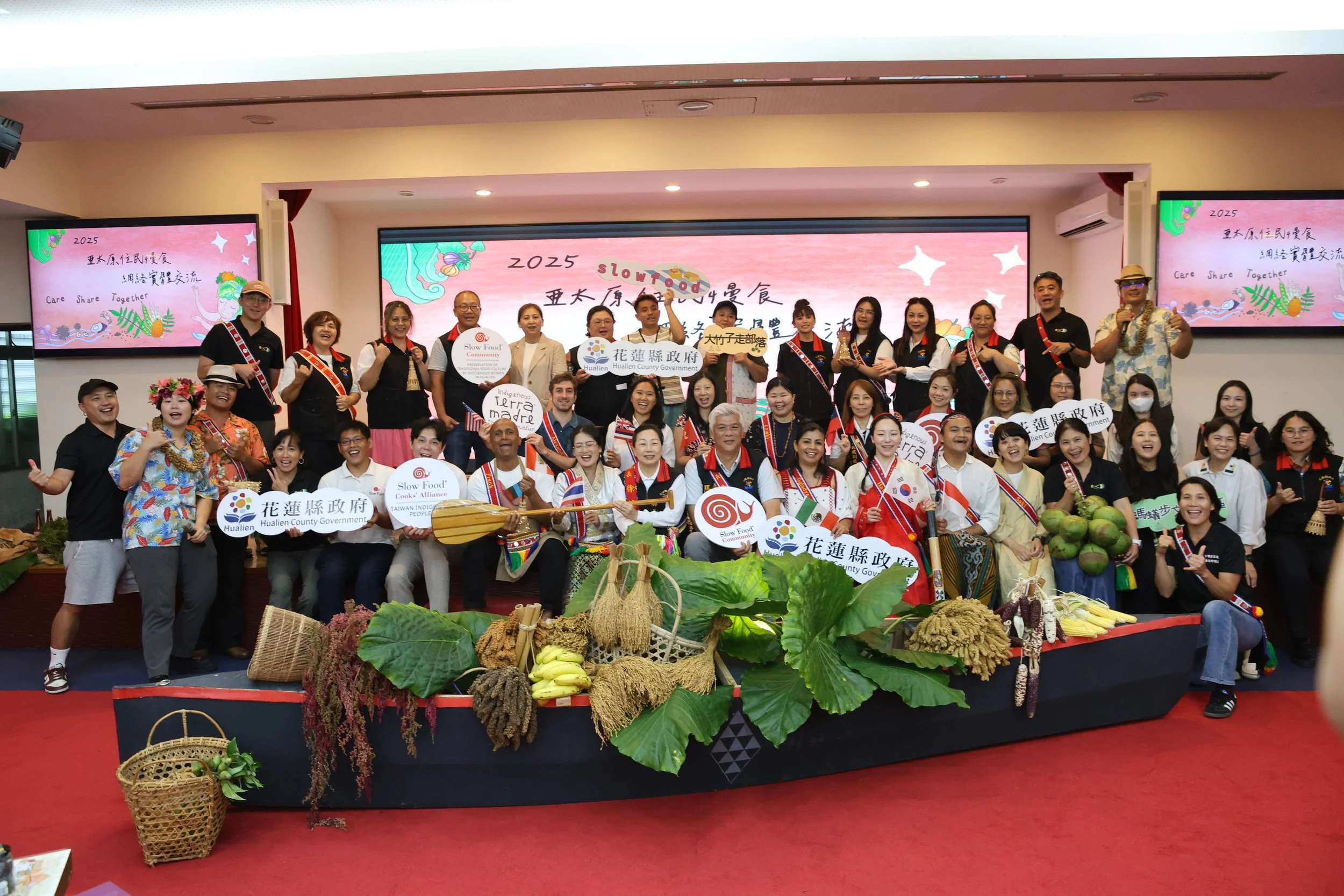
In June 2025, Slow Food Hualien hosted an exchange program inviting delegates from Slow Food communities across the world—Peru, Hawai‘i, Ryukyu (Okinawa, Japan), South Korea, Mexico, Hong Kong, Thailand—while I represented Indonesia. The program’s aim was to expand awareness and understanding of Taiwan’s Indigenous cultures, particularly their food traditions.
Much like Indonesia, Taiwan is home to many Indigenous groups, each with its own language, customs, and worldview. This diversity itself may be one of the defining threads that bind Austronesian societies together. Among them, the Amis people form the largest population—much like the Javanese in Indonesia.
If the island once known as Formosa truly is the ancestral homeland of Indonesia’s earliest peoples, then cultural parallels are inevitable. Language offers the first clues: bulan and fulan, aku and ako, lima and lima, kakak and salikaka. Most striking is the word mata—“eye”—a word that appears with nearly identical form and meaning across Austronesian cultures, from Māori, Tagalog, Fijian, Samoan, and Tongan, all the way to Hawaiian.
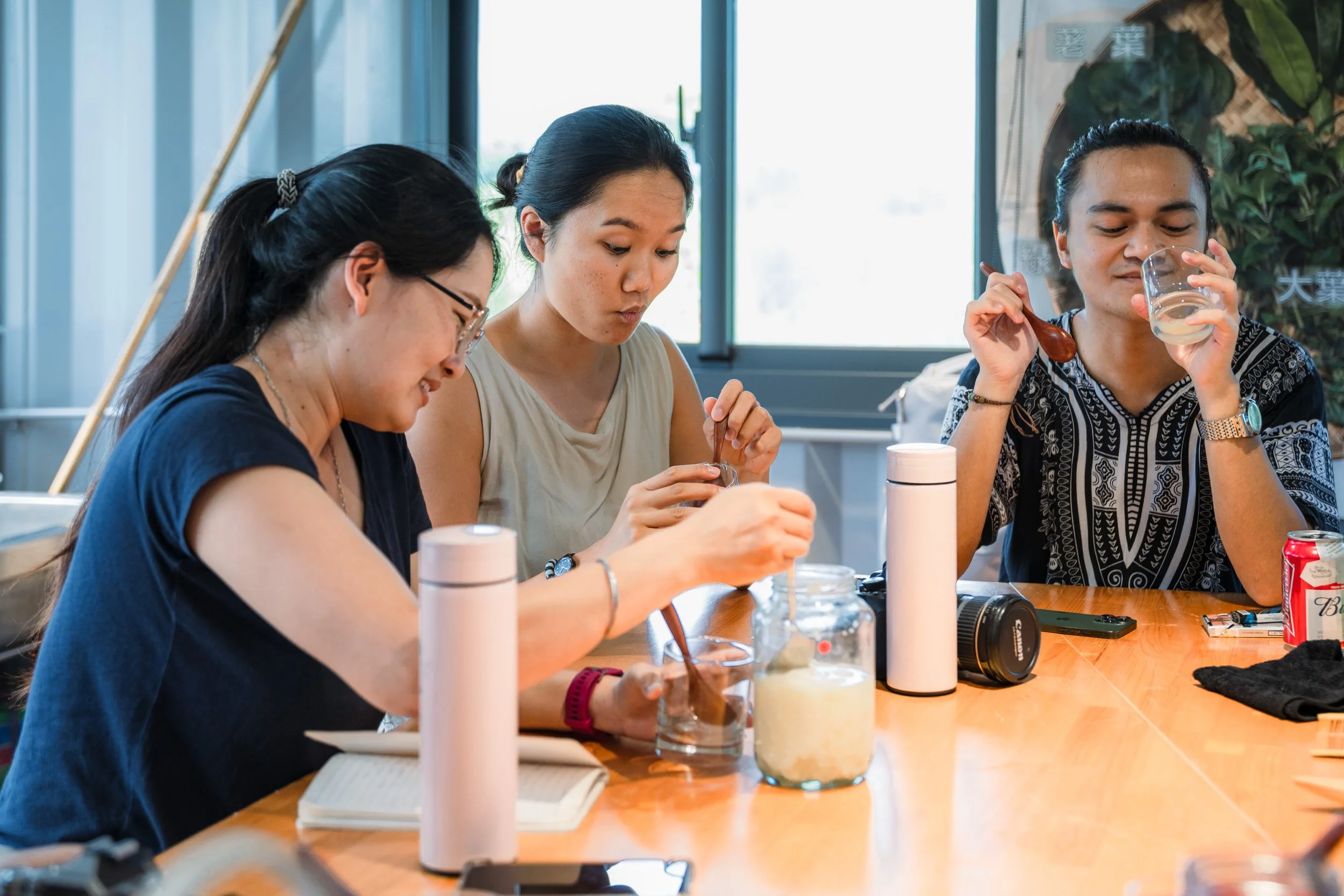
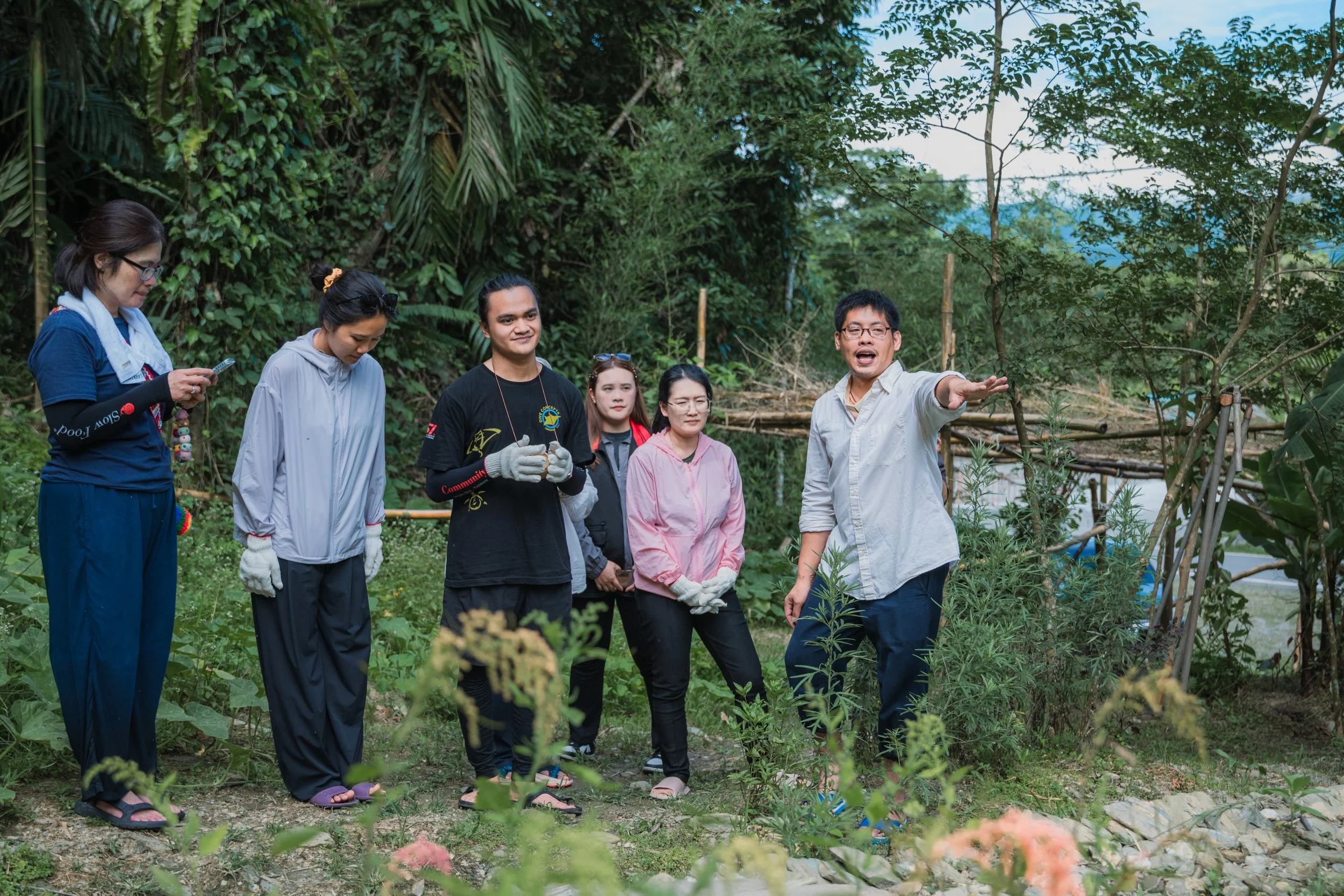
*Biodiversity program, attending a rice wine workshop
Food, of course, became the second—and most tangible—bridge. The program was divided into three tracks: the Chefs’ Alliance, Indigenous Travel, and Biodiversity, the last of which I joined.
The Biodiversity program began with a rice wine workshop. Alongside three other delegates, I was warmly welcomed into a workshop home with a permaculture garden flourishing in the backyard. From early morning, we were taught how to make koji using glutinous rice flour combined with the juice of eight medicinal herbs. The mixture was kneaded, shaped into fermentation balls, and dried.
We then steamed glutinous rice over a traditional wood-fired stove, mixed it with the starter, and sealed it in jars to begin fermentation.
No workshop, however, is complete without tasting the results. They brought out rice wine that had been fermenting for about a week. The moment I tasted it, I froze—this was tape ketan, a food deeply familiar to Indonesians. The difference? In Indonesia, we don’t classify it as wine or alcohol, but as a humble fermented snack.
I excitedly told them that we share the same tradition—and added that Indonesians also use koji to ferment cassava. This revelation was met with genuine enthusiasm.
Though unproven, it is entirely possible that the tradition of glutinous rice fermentation—or the making of traditional rice wine—is an ancient practice, preserved for over 5,000 years by early Austronesian societies.
More connections emerged through the biodiversity of Amis land. While foraging through their permaculture garden, my eyes caught a large tree bearing a strangely familiar fruit.
“That’s kluwih,” I said instinctively.
It made perfect sense. Kluwih (Artocarpus camansi) is the wild ancestor of breadfruit (Artocarpus altilis), a plant deeply associated with Austronesian and Pacific Island cultures. Kluwih—also known as tewel—was domesticated in Papua New Guinea around 3,000 years ago to produce seedless fruit with thicker flesh. This is supported by a University of Chicago journal titled “Early Agriculture and Plant Domestication in New Guinea and Island Southeast Asia.”
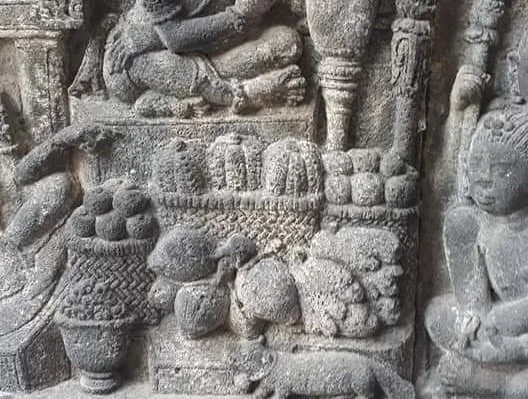
*stone relief found in Borobudur temple, which is said to refer to Breadnuts or kluwih.
Even more compelling is the presence of kluwih imagery carved into the reliefs of Borobudur Temple—clear evidence that it is an endemic food of the Nusantara. Other foods depicted in Borobudur include millet (jewawut). Coincidentally, during this program, we learned about the importance of millet in Amis traditions and their oral histories.
One such story is Mapaliw, a legend about two children stranded during a sea voyage amid a devastating flood. They carried millet seeds with them, brought them to the mountains, and from those seeds began a new civilization.
Documentations by Alexander Pomper
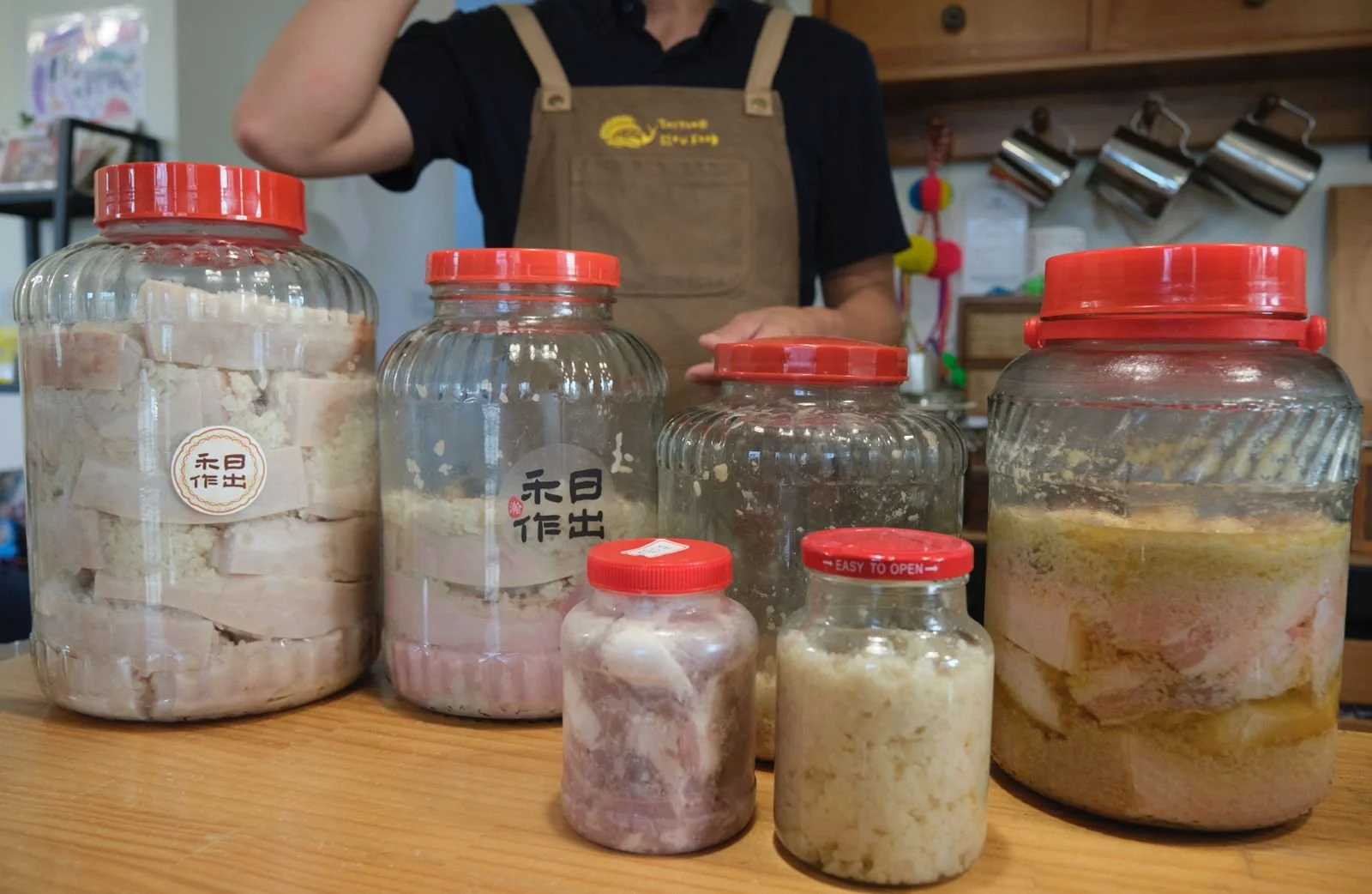
I encountered yet another parallel during my visit to Taitung, where I met the Slow Food Taitung community. There, I learned about silaw—a traditional fermentation of wild boar meat that holds deep cultural significance for the Amis people. Instantly, it reminded me of Dayak cuisine, particularly sasat or babi asin. In flavor and complexity, it stands shoulder to shoulder with prosciutto or even pancetta.
While these observations may seem casual—and while there is always the possibility of later acculturation through colonial or non-Austronesian influences—witnessing them firsthand has deepened my appreciation for Indigenous Nusantara traditions that long predate Indian cultural influence.
And so the questions arise: Are there more parallels waiting to be discovered among Taiwan’s interior tribes? Where can we truly study Indonesia’s endemic food cultures? Are there other inscriptions or relics, beyond Borobudur’s reliefs, that can help us preserve Indigenous food heritage? And once these fragments are gathered—can we, at last, protect and sustain this immense biodiversity?
